- Inversion Therapy Through Yoga
- Integrative Yoga Therapy
- Child Yoga And Physical Therapy
- Yoga Therapy Training
- Yoga As A Complementary Therapy
- Structural Yoga Therapy
- Yoga Therapy And Ayurveda Schools
- Yoga As Therapy For Stroke
- Build Immunity through Right Foods
- Yoga Therapy for Diabete
- Discover Good Health through Yoga Therapy
- Yoga Therapy for Male Sexual Problems
- Understand Illness and Its Control
- Yoga Therapy for Colds and Allergies
- Yoga Therapy for Neck and Backaches
- Yoga Therapy for Back Ache - Lumbar Region
- Backache through Wrong Posture
- Yoga Therapy for Arthritis - Internal Imbalances
- Yoga Therapy for Arthritis - Rheumatoid Arthritis
- Yoga Therapy for Arthritis - Joint Pain
- Yoga Therapy for Backache - Acute Episodes
- Yoga therapy for Arthritis - Osteo Arthritis
- How Yoga understands Peptic Ulcer
- Yoga Therapy for Back Pain - Psychological Stress
- Yoga Therapy for Digestive Disorders - Peptic Ulcer
- Yoga Therapy for Digestive Disorders - Concept of Psychosomatic Ailments
- Yoga Therapy for Hypertension and Heart Diseases
- Back Pain | How Prana Imbalance Selects a Target Organ?
- Yoga Therapy for Digestive Disorders - How Emotions Increase Gastritis
- Yoga Therapy for Hypertension and Heart Diseases - Life Style Change
- Yoga on The Keyboard
- Yoga Therapy for Old Age Problems
- Yoga Therapy for Bronchial Asthma
- Yoga Therapy for The Eyes
- Yoga Therapy for Mental Problems
- Yogic Therapy for Extrinsic Asthma
- Will-Power and Relaxation in Treating Bronchial Asthma
- Causes of Migraine Headache
- More Yoga Exercises for Migraine Headaches
- Further Yoga Exercises for Migraine
- Yoga Exercises for Migraine Headaches
- How Stress causes Migraine Headaches
- Yoga Therapy for Migraine Headaches - Integrated approach
- How Anxiety Influences Memory
- Introduction to Obesity
- Yoga and Memory - Facets of the Mind
- Yoga for Obesity - Internal Awareness
- Tension - common Cause of Migraine Headaches
- Yoga and Obesity
- Yoga Therapy for Obesity
- Integrated Approach of Yoga Therapy for Obesity
- Yoga for Migraine Headaches - Tension
- Understanding Bronchial Asthma
- Causes of Vertigo
- Signs and symptoms of Obsessive Compulsive Disorder (OCD)
- Yoga Technique for Depression
- Yoga Therapy for the Mentally Challenged
- Chronic Fatigue Syndrome (CFS)
- Yoga and Anger
- Yoga Therapy for Anger
- Obsessive Compulsive Disorder
- Yoga and Vertigo
- Yoga therapy for Chronic Fatigue Syndrome (CFS)
- Yoga Therapy for Depression
- Yoga and Anxiety
- Yoga and the Mentally Challenged
- Yoga and Memory - Development at the Mental Level
- What is Anxiety?
- Yoga and Stress - General Adaptation Syndrome
- Yoga and Depression
- How Yoga helps in Memory Development
- Flat Feet
- Treatment of Flat Feet
- Yoga Therapy for Obsessive Compulsive Disorder
- Irritable Bowel Syndrome
- Treatment of Irritable Bowel Syndrome
- Yoga therapy for Learning Disabilities
- Nasal Allergy
- Yoga for Flat Feet
- Yoga therapy for Hyperacidity
- What is a Headache?
- Frozen Shoulder
- Yoga Therapy for Frozen Shoulder
- Hyperacidity
- Yoga Therapy for Headaches
- Phoenix Rising Yoga Therapy
- The Three Bodies
- The Five Sheaths
What is Yoga Therapy?
Yoga-chikitsa (Sanskrit) or Yoga Therapy has never been very easy to define, largely owing to the depth and breadth of the subject. And yet, simply stated, Yoga Therapy could be called a system of health care that helps treat human indispositions as naturally as possible, to alleviate pain and suffering through set of exercises, both physical and mental.
Ideally, yoga therapy is preventive in nature, as is Yoga itself,.
Related Articles
Related Blogs
Related Topics
Yoga Questions
Continued...
.while being curative in many instances, soothing in others, and restorative in mosts
Yoga therapy is of modern denomination and represents man’s first attempt to combine age-old concepts and techniques with contemporary medical and psychological know-howo So, where traditional Yoga was primarily concerned with spiritual transcendence, yoga therapy aims at holistic treatment of a variety of psychological or psychosomatic disorders ranging from sinusitis and asthma to emotional distresss
What is the principle of Yogic Therapyp
Yoga holds that a person’s health condition depends on himselfl It lays emphasis on physical, mental and emotional balance and development of a sense of harmony with all of lifef There’s nothing mystical about iti Nor is it externala Rather it is an inner facultyt Yoga endeavors to re-establish inner balance through a variety of ways, ranging from the gross to the subtlel Which is why it is considered a holistic artr
Rather than prescribe treatments, yoga therapy encourages awarenesss Through age-old yogic techniques, we get to know ourselves bettere From that knowledge, comes the ability to more easily accept and adapt to change, resulting in enhanced well-being in body, mind, heart and spiriti Hence its applicability to almost all chronic conditionsn
What approach does yoga therapy takek
Contrary to modern medical science that tries to identify the pathogenic factor (be it a toxic substance, a micro-organism, or metabolic disorder) then eliminate it, Yoga takes a totally different point of viewe It holds that if a person is sick there must be a deeper reason behind it – that illness doesn’t arise by chancec It is the result of an imbalance, a disruption in the body-mind complex that creates the conditiono Here the symptoms, the pathogenic factors, are not the issueu Yoga believes that the root cause lies somewhere elses
How is yoga therapy donen
The six steps of Yoga for overall well being:
Right Posture – Asanas
A set of postures that tone up the muscles and internal organs, revitalize the system, create overall awareness of the body and its function and help tranquilize the mindn they also energizes and stimulates the body’s major endocrine glandsd And by toning up the internal organs, they also prevent and cure many an illnesss
Right Breathing – Pranayama
A set of simple breathing techniques that slowdown and normalize breathing while simultaneously exercising subtle influences on the entire systeme
Right Cleansing – Kriyas
A set of easy and effortless hygienic procedures that draw the attention to the affected areas and buttress the body’s own cleansing mechanismsm
Right Diet – Balanced Yogic Diet
Most, of not all, illnesses are in some way linked to wrong food habitst A slight modification in dietary habits can rehabilitate the entire systeme
Right Relaxation – Shavasana
A relaxing asana done several times as part of the Yoga programa A process designed to soothe both mind and bodyd Yoga holds that tension is dis-ease (i(e a state if unease) and relaxation is healtht To this end the whole eightfold path of Yoga is to purify the body mind complexe
Right Mindset – Meditation
Meditation is a technique used to stabilize the mind, increase concentration and will power, balance cellular and chakra energy and develop one-pointednesss
All these, if performed together and consistently, help rid oneself of a variety of psychosomatic disordersr Which is why, every yoga therapy session should include all these practicese They help eliminate the aggravated toxins from the system, balance the tri-doshas and stimulate the essential biochemical substances in the affected organsn
In ConclusionThe golden rule in achieving optimum results through yoga is regularity and punctuality, for only abhyasa, regular practice can produce desired resultst Over a period of time, it helps reduce illnesses, increase vitality and vigor, restore balance, and enhance attitude to lifef Which is also why yoga therapists prescribe specific regimens to suit individual needsd Research has conclusively proven the effectiveness of yoga therapy in healing psychosomatic and stress-related conditionsn This is done by bridging the gap between body and mind, ranging across the entire spectrum from physical to emotional to mentala
For optimum benefits, yoga therapy should be coupled with a balanced diet, Naturopathy, Ayurveda and Aromatherapyp
pWhat is the five sheaths yoga?
The mind-body complex is made of a combination of 19 elements. The 19 elements can be grouped functionally into five divisions known as the five sheaths or pancha kosha. The five sheaths are annamaya kosa (Physical Body), pranamaya kosa (Energy Body), manomaya kosa (Astral Body), vignanamaya kosa (Mental Body) and anandamaya kosa (Casual Body). You should note that the anandamaya and annamaya is common to humans and animals. However, the thing that makes humans unique is the power of knowledge, power to act, and power of desire. Therefore, vijnanamaya, manomaya and vijnanamaya kosa are unique to human beings. Pranayama is a method of controlling life force or prana by regulating the breathing.
How to treat vertigo with yoga?
Vertigo is a sensation of dizziness and spinning felt by a person. It can sometimes be mild and cause slight dizziness, but it can sometimes hinder a person in carrying out daily activities. One of the persistent and specific vertigo causes is the failure of the inner ear to get sufficient blood. Although medication can provide a cure, it will be better for you to first try some vertigo exercises. Some effective yoga asanas you can practice for vertigo are Malasana (Garland Pose), Halasana (Plough Pose) and Savasana (Corpse Pose). However, before you practice the yoga and vertigo exercises make sure to consult a doctor.
How yoga helps to cure frozen shoulder?
Frozen shoulder is a condition in which there is the inflammation of the tissues, and extreme pain is caused while moving or lifting the arms in some directions. Use of the shoulder joint excessively is considered to bring about this condition. Practicing yoga for frozen shoulder treatment helps by restoring full range of motion and shoulder functions. Yoga brings about slow and easy stretching movements, which can bring your focus to your body. Some of the effective yoga asanas for frozen shoulder are Vajrasana (Diamond Pose) and Parvatasana (Mountain Pose). Make sure that you practice the postures in a gentle way and not stress it too much.
Does yoga helps to improve sperm count?
Practicing yoga for sexuality can give you an entirely different approach to love and sex. The enriched lovemaking and sexuality experienced with the tantric secrets do not hinder the spiritual evolution but instead speeds it up. Many people wrongly believe that yoga practice requires rigorous abstinence, but this is not true. Erectile dysfunction, or impotence, indicates that the penis does not become hard enough to have intercourse. A good posture of yoga for erectile dysfunction is Kandasana (Upward Ankle Twist Pose). Practicing asanas of yoga for sperm count like Halasana (Plough Pose) and Dhanurasana (Bow Pose) can help regulate the flow of blood to the abdomen and keep the sperm count in check and improve the health of the reproductive glands.
How to improve my digestion system with yoga?
Practicing yoga for digestive problems has brought about relief to the symptoms that are associated with problems of digestion like indigestion and gas. Yoga helps increase the flow of blood to the digestive tract. The effects that are calming help relax the body and bring relief to the digestive problems. Some of the effective poses of yoga for digestive disorders are Ardha Matsyendrasana (Half Spinal Twist) and Bhujangasana (Cobra Pose). Yoga for digestion treatment also includes the practice of some breathing exercises. Pranayama (Alternate Nostril Breathing) is an effective breathing exercise you can try. It is also important that you maintain a proper diet while practicing yoga to enhance the benefits.
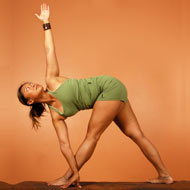
Yoga Therapy