How To Design A Yoga Practice Session
How to design a Yoga practice depends a lot upon one’s Yoga practice. First and foremost, one has to be an accomplished Yoga practitioner. Followed by years of practice comes a Teacher’s Training Course or two. Subsequently, you teach for a few years. All this, in order to get a hang of the subject.
Remember, Yoga is an art and a science. It is, contrary to popular perception, more than just a work out or a system of physical exercise.
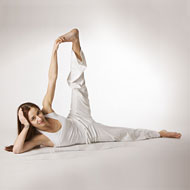

Yoga is a deeply profound spiritual science aimed at attaining the summom bonum of life through physical, mental and spiritual practices.
In essence, the meaning of the word Yoga – derived from the Sanskrit root “Yujir Yogey” – is to yoke, to join, to put together. In this sense, Yoga means uniting all of one’s human faculties to work in unison with each other.
In the other sense it means making the microcosm – Jivatma, Individual Soul – work in tandem with the macrocosm – Paramatma, Supreme Soul, the soul of all. Understand, therefore, that it calls for not a little practise, at all levels before you are able to design a Yoga practice program for yourself and for others.
First things first: Yoga consists of 8 limbs. They are:
- Yama
- Niyama
- Asana
- Pranayama
- Pratyahara
- Dharana
- Dhyana
- Samadhi
You must understand this to proceed. This is why the science, in its entirety, is called Ashtanga Yoga – 8 limbs of Yoga. It consists, essentially of the following steps in life:
- Right Posture – attained through the practice of Yogasanas
- Right Breathing – learnt through the practise of Pranayama
- Right Relaxation – learnt through the practise of Shavasana
- Right Diet – Yogic Diet
- Positive thinking and Meditation – learnt through scriptures and meditative practices.
Unless one is at ease and is breathing correctly, one is not able to be at peace. Likewise, the principle of “Healthy mind in a healthy body,” holds true in Yoga. Hence the importance of a Yogic (Sattvic – Pure) Diet. Then again, unless one is totally and completely relaxed, one is not at peace and scant able to think correctly, let alone take right decisions. Positive thinking and Meditation sums it all up or is the binding cord that puts all together.
So, start by practising Yoga, master the subject, learn the necessary asanas and pranayamas, the subtle nuances of a Yoga diet and then you will be able to design Yoga practices for yourself and for others.
Read more articles from the General Discussion Category.
 Find Pose