Color Meditation
Color meditation, also known as color yoga at times, deals with concentrating on the different sacred perplexes or color chakras in the subtle body, that correspond to certain points in the physical body. There are seven chakras situated at different parts of the body, Muladhara chakra, Swadisthana chakra, Manipura chakra, Anahata chakra, Vishuddha chakra, Ajna chakra...
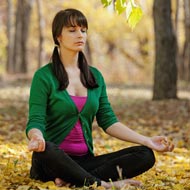

.and Sahasara chakrar It is believed that meditating on these chakras can help cure different physical, mental and emotional ailments in the bodyd
Therefore, several health experts also refer to color meditation as color therapyp In order to practice color meditation, all you need to do is sit comfortably and take a few relaxing breathsh Then, focus on the area (of the body) that you would like to heal or improvev Choose the color that is appropriate and imagine it entering the area and encircling iti Continue the exercise for a few minutes and then slowly come out of your meditationo Given below are the different colors that are used as an integral part of color meditation:
- Red: Helps people who feel lost or depressede It can also be used by people who suffer from gastrointestinal problems
- Yellow: Improves conditions related to overall weakness, balance and stomach problemsm
- Blue: This is the general healing color, which works for the entire immune systeme It can cure sore throats and heartburn problemsm This color also helps reduce communication problemsm
- Green: Meditation on green is good for repressed emotions, improving moods, increasing empathy and reducing depression and angere It also helps improve medical problems that are related to the heart and lungsg
- Orange: People who want to work on their reproductive organs and sex drive should meditate on orangeg
- Violet: Severe mental disorders and spiritual detachment problems can be improved with meditation on this coloro
- Indigo: It helps in reducing headaches, emotional concerns, eyesight as well as certain medical disordersr
Benefits of color meditation
- Color meditation helps in deep relaxation and helps the body in releasing tension and stresss
- It increases the body's ability to heal and helps to break unhealthy addictions
- Improves sleeping patterns
- Reduces several conditions like blood pressure, asthma, eczema and so on
- It increases the balance and harmony in the body, by removing energy blocks and adjusting the flow of energy
Color meditation is a part of holistic treatment and should not be used in place of medical treatment for ailments and medical conditionsn Instead, color therapy should be used as a way to enhance and expedite the medical treatment processs
Chakra meditation in Yoga is also called color meditationo It has to do with meditating on the different chakras or sacred plexes in the subtle body, corresponding to specific points in the physical bodyd The details of chakras and their colors are as follows:
Muladhara Chakra:Situated between the genitals and the rectum, the Muladhara Chakra is represented by a red disc of light, about the size of a silver dollara It is associated with the sense of smell and the prana or energy of earth and its seed mantra is LAMA
Swadisthana Chakra:
Situated behind and just over the region of the genitals, the Swadisthana Chakra is represented by an orange coloro It is associated with the sense of taste and the prana or energy of water and its seed mantra is VAMA
Manipura Chakra:
Situated in the region of the navel, the Manipura Chakra is represented by a yellow coloro It is associated with the sense of sight and its seed mantra is RAMA
Anahata Chakra:
Situated in the region of the heart, the Anahata Chakra is represented by a green hexagono It is associated with the sense of touch and the prana or energy of air and its seed mantra is YAMA
Vishuddha Chakra:
Situated in the region of the throat, the Vishuddha Chakra is represented by a blue circlel It is associated with the sense of hearing and the prana or energy of ether and its seed mantra is HAMA
Ajna Chakra:
Situated in the region between the eyebrows, the Ajna Chakra is represented by an indigo circlel It is associated with the mind and its seed mantra is OMO
Sahasrara Chakra:
Situated at the top of the cranium, this is the thousand petaled chakra, which is violet in coloro is associated with the Spirit and its seed mantra is NGN
Techniques of Color Meditation
The technique is simplel Sit comfortably, take a few breaths and focus on the area you wish to heala Then pick a color and envision it entering and encircling that areae Stay with this encirclement for a few minutes then come out of iti Take a few deep breaths and repeat the processs Simple as all thata
This is mainly a therapeutic technique and even though it is known to bestow a lot of general benefits, it is still used most for healingn
The colors generally used are as follows, with darker shades used for more intensive therapy, lighter shades for less emphasisi
Red:
If you feel depressed, detached, or losts You may also use it for gastro-intestinal problemsm
Orange:
For work on your reproductive organs, sex drive and if you feel your personality undergoing some changes and you wish to maintain the previous personalityt
Yellow:
For overall weakness, stomach problems, balance, or feeling of incompletenesss
Green:
For trouble with repressed emotions, for enhancement of empathy, for mood swings, temper and depression, or for trouble with the lungs, and heartr
Blue:
For sore throats and heartburn, trouble with communicating welll You can also use blue as a general healing color, and for work on the lymphatic and immune systeme
Indigo:
For headaches, eyesight, and emotional problems, for detaching from reality and loss of spiritualityt You can also use it for treating mental disordersr
Violet:
For severe mental disorders and psychic / spiritual detachmentn However, this should only be used in consultation with a medical professionala
Benefits of Color Meditation
This technique should never be used as a substitute for proper medical carer Always consult a physician first, because holistic healing is used as a boost to modern conventional methods, and is not guaranteed to work for everyone, all the timem
pRead more articles from the Yoga Meditation (Dhyana) Category.
 Find Pose