- Hypothyroid
- Physical Symptoms of Stress
- Chronic Back Pain Relief
- Bedtime Yoga
- Yoga for Beginners
- Yoga for Kids
- Yoga for Obesity
- Yoga for Stress
- Yoga for Back Pain
- Yoga for Allergies
- Yoga for Athletes
- Yoga for Fibromyalgia
- Yoga for Golfers
- Yoga for Pregnant Women
- Yoga for Thyroid
- Yoga for Your Life
- Yoga for Eyes
- Yoga for Headaches
- Yoga for Sciatica
- Yoga Poses for Flat Abs
- Yoga Poses for Healthy Complexion
- Yoga Poses for Insomnia
- Yoga Postures for Fertlity
- Yoga Belt for Back
- Yoga for Couples
- Yoga for Seniors
- Yoga for Varicose Veins
- Yoga for Women
- Yoga Poses for Singers
- Yoga Positions for Older Women
- Yoga Postures for Abs
- Yoga Postures for Conception
- Yoga for Meditation
- Yoga for Menstrual Cramps
- Yoga for Runners
- Yoga for Relaxation
- Yoga for Men
- Yoga Therapy for Hypertension
- Yoga for Scoliosis
- Yoga for Inflexible People
- Benefits of Yoga for Dancers
- Yoga for Neck Pain
- Breathing Exercises
- Breathing Problems
- Yoga for Constipation
- Yoga for Medical Conditions
- Yoga for Strength
- Yoga for Legs
- Deep Breathing
- Relaxation Breathing
- Yoga for Arthritis
- Yoga for Multiple Sclerosis
- Yoga for Plantar Fasciitis
Yoga Poses For Healing Herniated Discs
A bulging disc, herniated disc, or a slipped disc as it is most commonly called is really not a slipping or moving of the bones that make up the spinal column or the discs that cushion the spaces between the bones. The term ‘slipped disc’ is actually a misnomer as it is medically inaccurate.
What really happens is that the soft, jelly-like substance that makes up the intervertebral discs protrudes outside because of a rupture in the outer ring of the disc.
Related Articles
Related Blogs
Related Topics
Yoga Questions
Continued...
Depending on the extent of the rupture, the severity of the bulge is also different. The actual disc itself is fixed between the bones and does not slip at all. The rupture in the outer ring of the disc can be due to any reason, starting from trauma and heavy lifting to a genetic predisposition to such problems.
Usually, small tears heal by themselves within a couple of weeks, but large tears will take more time and may sometimes become so severe that they will require surgery to correct. Currently, this problem is treated by physiotherapy. Traction is one of the best treatment methods, and when traction is exerted at the site of the rupture, the negative pressure exerted on the inside of the spine causes the soft jelly that makes up the inside of the disc to go back inside. Medication is more for pain relief than anything else.
Nowadays, however, most people resort to certain exercises that are almost as effective as traction, if not more, for healing herniated discs. Moreover, the advantage of exercising is that it also helps to strengthen the muscles of the back, ensuring that the condition does not worsen or extend to other vertebrae. Yoga, because it is such a gentle form of exercise, is becoming very common in the treatment of back pain.
Yoga for disc bulge
The different poses (asanas) that make up yogic exercises are very different from normal exercises because they not only contract the muscles but also extend them. Rather than concentrate on big muscles that may look good but do not offer much physical strength, yoga concentrates on improving stamina and strengthening the core, helping to treat a number of physical ailments.
Some asanas for healing herniated discs are given below.
- Cobra Pose (Bhujangasana)
- Locust Pose (Shalabhasana)
- Bow Pose (Dhunurasana)
- Half Spinal Twist (Ardhamatsyendrasana)
- Mountain Pose (Tadasana)
- Side Bending Stretch (Tiryak Tadasana)
- Waist Rotation (Katichakrasana)
- Triangle Pose (Trikonasana)
- Warrior Pose (Veerasana)
- Corpse Pose (Shavasana)
All these poses are especially good for back pain and help strengthen the muscles of the spine, thus giving you good posture. A good posture is very important in preventing future recurrences of a slipped disc.
Tips:
Although some of these poses are not very difficult, others put tremendous strain on the muscles of the back. It is therefore advised that people who already have herniated discs approach a yoga instructor who is experienced in dealing with people who have such problems.
If you cannot go for formal training, it is always best to start with the simplest exercises and take things slowly. One of the tenants of yoga is that you never push your body beyond its limit and instead concentrate on doing what it is able to do. Over time, the body gets stronger doing simple exercises, so that you can move on to more difficult ones. In fact, most of the difficult ones take months of practice to master.
There are a number of other poses that are also equally beneficial, but put a lot of flexion on the spine. While this is good in keeping the spine strong while being supple, it is really not recommended that anyone with a herniated disc do these poses as there is a possibility that it may worsen the condition.
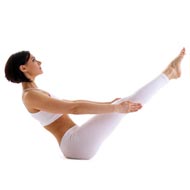
Yoga Poses for Bulging Discs