- Massage Yoga Tantra Healing
- Healing Yoga Music
- Drops Of Nectar
- Yoga Balance And Healing Art
- Liver Healing Yoga
- Healing And Yoga Center
- Why Yoga Healing
- Yoga For Healing Prolapse Of The Uterus
- Healing Benefits of Yoga
- Healing Yoga for The Heart
- Yoga Healing and Prana
- Healing Powers of Yoga
- Science of Healing Yoga
- Balance of Energies
- Healing Yoga for Diabetes
- The Immune System
- The future of Yoga as a Healing Therapy
- Yoga for Healing Cancer
- Yoga for Healing Rheumatoid Arthritis
- Yoga for Healing Asthma
- Yoga for Healing Chronic Constipation
- Yoga for Healing Sinusitis
- Yoga for Healing Backaches
- Yoga for Healing Hypertension
- Yoga And Healing
Yoga For Healing A Bulging Cervical Disc
What is cervical spondylosis?
Cervical spondylosis can be described as a cervical disc disease or a condition that affects the cervical spine anatomy. It occurs in the cervical disc of the neck and spine.
With age the cervical disc between the spine and the neck undergo a lot of wear and tear. Cervical spondylosis is usually characterized by sever cervical spine pain.
Related Articles
Related Blogs
Yoga Questions
Continued...
This condition is usually the result of the deterioration of the cartilage and bones, which make up the neck and the backbone. At times, irregular bony outgrowths known as bone spurs may also appear on the cervical spine. This condition affects several people; in fact a cervical spine x ray conducted on most people over the age of 30 show some amounts of vertebrae degeneration. Therefore, it is safe to assume that these bony spurs affect most people over a period of time.
While the most basic cause of age related wear and tear, there could be other factors too, that lead to the cervical spine neck pain, caused by spondylosis. Some of the other factors that could trigger of cervical spondylosis and other types of cervical spine disease are a cervical spine injury, complications that arise from a cervical disc replacement procedure, a cervical spine surgery or a cervical disc surgery, loss of elasticity in the spinal discs, stiffening of the ligaments that connect the neck muscles and bone and bulging discs or herniated discs.
Symptoms of cervical spondylosis
In most cases cervical spondylosis affects the neck, leading to severe stiffness and pain. At times, nerve compression may also be present in addition to the other symptoms of cervical spondylosis, which include:
- Severe neck pain and stiffness
- Pain in the chest, arm and shoulder
- Pricking and tingling sensation in the arms and hands as well as the legs and the feet
- A feeling of numbness in the arms and hands as well as the legs and the feet
- Lack of coordination
- Difficulty in walking
- Problems in reflexes
- Loss of bladder control, accompanied by bowel retention and urinary retention
- Unexplained changes in bladder and bowel control
- Sudden weakness in the legs, for no apparent reason
- Neck pain accompanied by very high fever
- Pain and stiffness in the neck that are a result of a neck injury
- Chronic neck pain, which lasts for more than 6 months and leads to weight loss
- Wearing a neck brace or a cervical collar at regular intervals during the day, to keep a check on neck motion. This is turn will reduce the irritation in the nerves
- Using certain over the counter medicines and pain relievers, which include aspirin and ibuprofen
- Applying either ice or a heating pad to the neck for reducing the pain. Alternate cold and hot therapy is more effective than using either one
- Traction on the neck for a period of two weeks or so, to reduce the pressure on the nerves
- Taking injections of corticosteroids around the nerves and discs that are between the vertebrae
- Pavana Mukhtasana (The Wind Relieving Pose)
- Ardha Halasana (The Half Plough Pose)
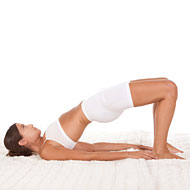
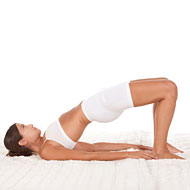
- Setubandhasana (The Bridge Pose)
- Naukasana (The Boat Pose)
- Makarasana (The Crocodile Pose)
- Ardha Shalabhasana (The Grasshopper Pose)
- Vakrasana (The Twisting Pose)
- Brahma Mudra (Rotation Technique)
- Parvatasana (The Mountain Pose)
- Bhadrasana (The Auspicious Pose)
- Shashankasana (The Hare Pose)
- Chakrasana (The Wheel Pose)
Some of the more severe symptoms of cervical spondylosis are:
In case any of the severe symptoms of the condition become evident, it is important to consult a doctor immediately, or preferably seek immediate medical attention. Most doctors need to confirm the exact extent of the condition, but conducting a cervical spine MRI. Apart from the MRI of the cervical spine, doctors may also conduct x rays or other tests like the neck flexibility assessment, neurological exams, CT scans, Myelogram, Electromyogram and a nerve conduction study.
Treatment of cervical spondylosis
While there is no cure for cervical spondylosis, it is possible to use various treatment options, to reduce the pain caused by this condition. Some of the treatment options recommended by doctors are:
In most cases this condition gradually decreases and stabilizes on its own, without any medication or therapy. Most doctors suggest simple home remedies as well as cervical disc exercises and cervical spine exercises, to improve the symptoms of this condition. Other exercises that may also be recommended by doctors are cervical bulging disc exercises (or cervical disc bulge exercises) and cervical disc herniation exercises. However, in some cases, the pain and the symptoms may worsen without the appropriate treatment. In such cases, doctors may suggest more aggressive forms of treatment, which also include surgery.
Cervical-spondylosis yoga exercises
There are several people who use yoga for cervical spondylosis. This is because there are certain yoga poses and postures that can help strengthen the back muscles, which in turn increase their flexibility. Most of the cervical spondylosis yoga exercises increase traction naturally, which reduces the compression in the nerve root. Some of the most common poses that can be included in a yoga for cervical spondylosis routine are:
There are many people who believe that cervical spondylosis and cervical spondylitis are the same condition. They also use the words interchangeably to denote the same condition. However, apart from the fact that both the conditions affect the cervical spine, both the conditions are totally different.
Therefore, the poses in yoga for spondylitis may be different from the poses of yoga for cervical spondylosis.
It is absolutely imperative for all people suffering from cervical spondylosis to consult a doctor and get an approval before performing any of the yoga poses mentioned above. In addition to that, it is also important to practice these poses only under the guidance and supervision of a qualified trainer or guru. The trainer should be made aware of all the medical conditions that a person may be suffering from.
The muscles that support the cervical spine weren't designed to hold our heads up for long. An adept, stretching spine is required to support one's head. The excessive muscle work ends up in a mass of tension just under the most high up bump located on the back of the human head. A lot of muscles that begin in the pelvis, ribs, and shoulder blades attach under the occipital ridge. These muscle insertions are extremely tense almost all the time. If they aren't tense when we are holding our heads up, then the get tensed when trying to relax on a pillow. However, they are still contracting as high resting tone. The three higher vertebrae don't move much from their capital extension position. This is due to muscular tension. Orthopedics and physiotherapists are always digging their fingers in this muscle tension under the occipital ridge.
The mid cervical vertebrates of the human body are infamous for diagnoses like cervical disk herniation or cervical spondylosis. Any sudden or extreme movement in C4, C5, C6 just wear away the disks, joint linings, and result in abnormal mechanical stress to form osteophytes [spurs]. Cervical spondylosis is nothing but arthrosis of the spine with spurs and joint deterioration. The cervical disk walls are able to deal with just so much mechanical stress before the lateral walls start ton to weaken and bulging takes over. Hatha Yoga is an excellent way to heal this condition.
Chest openers are mandatory to boost the flexibility of the thoracic spines towards backward bends. Sethu Bandhasana, Adho Mukha Svanasana, and Chakrasana all have important spinal backward bending movements that our dull flexed spines need.
Very tense top shoulder blade muscles and side neck muscles are connected to the forward head. This is why the patient is also advised to also do a headless headstand in-between 2 folding chairs to release this hypertonus.
The real test are the standing poses in which the patient is expected to continue to ground, center, and lift as he / she moves through the different ranges of standing poses, while lengthening the cervical spines to support the movement of the head and arms.
Yoga For Healing A Bulging Cervical Disc