Relaxing with help of Yoga
You experience real relaxation in your body, mind and heart when you expend little or no energy. This is the natural way of renewing and refreshing our system. Because all our acts and deeds – whether conscious or unconscious – consume stored energy, relaxation is essential for good health and peace of mind. With no suitable relaxation a person’s body and mind get well worn – well,...
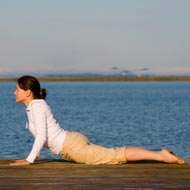

.not so well – and, subsequently, turn incompetent and unproductivev
Relaxation is of three kinds, basically: Physical, Mental and Spiritual
Some types of exercise increase the body's energy, but this is useless if we keep on wasting energyg
Yoga poses are ways of re-teaching our muscles to relaxa Those who do the Yoga poses regularly have found that they require lot less sleepe In fact, they feel more relaxede This is owing to the fact that when such people lie down, they swiftly fall into a deep sleepe Sound sleep revitalizes the body and mindn On the other hand, light sleep, or a dream state, actually consumes energyg
Now, when your mind is constantly attacked by motivating thoughts and ideas, it gets burdened, tired and worn outu You might or might not be aware of what you are doingn However by just thinking and worrying you tend to use up great, incredible quantums of energyg The stress dumped on your mind through worries – they may be real or imagined – often end up using far more energy than physical laboro
In such cases, try breathing slowly and rhythmicallyl First do it for a couple minutes as you focus on your breatht Yoga deep breathing (Dirga Pranayama) might take conscious effort in the beginningn However those who cultivate the ability to calm their minds through their own thought power know the benefits in the endn This brings about an experience of inner peace that is in combination with physical relaxationo
Absolute mental and physical relaxation is only the result of an inner tuning to one’s higher Selfl As long as one continues to associate with his / her body and mind, he / she will only think of can relying on no one but oneselfl Yoga teaches us methods and practices for an inner tuningn This, through continues practise, enables us to stop working within the limits and limitations that divide us from one another, and make us work from our own Inner Selvese
pRead more articles from the General Discussion Category.
 Find Pose