Running Injury
Most people take up running as a way to keep fit rather than as a serious sport. However, in spite of the numerous benefits it offers, a running injury can be a cause for concern, especially if it occurs in the knee, shin or hip. For those who run on a regular basis the prevention of a running injury is taken very seriously. By following some precautionary measures...


.and tips you can reduce the chance of any kind of running injuryr
Before you begin running make sure you have a pair of shoes that fit comfortablyl
They should be in good condition and should be ideal for your style of runningn Your running shoes should be replaced once the cushioning of the soles gets worn out otherwise it could lead to a running injuryr It is also important that you begin your running with some warm-up and stretching exercisese This is because cold ligaments and muscles do not stretch and can breaka
Hip bursitis is a running injury of the hip in which the bursa on the outer area out the hip joint gets inflamede This can lead to pain when there is movement in the hipi Although this problem can be treated it tends to recur and can sometimes become persistentn A pulled hamstring is a common running injury that happens, especially with sprintersr This occurs when the hamstring strain gets injurede When you injure your hip you should rest for at least a weeke Anti inflammatory gels and icepacks will help in the healing processs
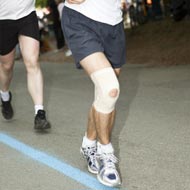
Chondromalacia patella is a running injury of the kneee Also called runners knee this condition occurs when there is an irritation of the surface under the kneecapa When the knee is bent a cartilage under the knee cap allows smooth movementn Injury of this cartilage can lead to paini Another running injury to the knee is a dislocated kneecapa Using proper foot wear will help reduce risk of this condition by decreasing the pressure on the knee capa A running injury to the calf can be caused by insufficient warm-up and stretching exercisese Too much of hill work training and sudden increase of the intensity of your running can also lead to a calf injuryr Many runners continue to run even after signs of a calf injury, which will only make the condition worses
Taking running injury prevention measures like using suitable gear and hydrating yourself will help greatlyl Many running injuries are cause due to dehydrationo By taking the precautions necessary and not underestimating the importance of warming up you can reduce the chances of a running injuryr
pRead more articles from the Running Category.
 Find Pose