The presence of oil in our diet is normally thought to be unhealthy. However, there are some kinds of oil that can be good for our health. Our bodies need certain fats that are contained in oils like sunflower oil. There are two kinds of sunflower oils: linoleic oil and high oleic oil. One of the benefits of sunflower oil is its use in cosmetic products. Sunflower oil helps the skin to retain moisture and so is a very effective skin care solution. The benefits of sunflower oil also include improved functioning of the cardiovascular system. It contains the essential fatty acids and high quantities of vitamin E which is required by the body. The prevention of conditions like colon cancer, asthma, and rheumatoid arthritis are other benefits of sunflower oil. Due to the manifold benefits of sunflower oil, most restaurants use it to prepare food.
The benefits of vegetable oil include the ability to increase the amount of HDL cholesterol needed by the body. This will also help in cleaning the blood vessels. Walnut, flaxseed, wheat seed and rapeseed oils are rich in alpha-linoleic acid, which is beneficial to the nervous system. Deficiency of alpha-linoleic acid will hinder the learning ability, deflection of the nerve signals, and increase the risk of thrombosis. If you suffer from diabetes or high blood pressure, you can take any of the vegetable oils except peanut oil. You should consume 3 to 4 tablespoons of vegetable oil a day. Before you use it, you must make sure that it has not become rancid as all the health benefits will be lost and the bad cholesterol will be increased. You should also store the vegetable oil in a dark place or a refrigerator as the vitamins and healthy substances will get destroyed by light.
Sesame oil has been used for thousands of years in India as a therapeutic oil. The benefits of sesame oil include the treatment of conditions like migraines, diabetes, and hepatitis. It is also very effective in removing the blocks from arteries. Studies have shown that sesame oil as an effective antioxidant. Sesame oil helps to neutralize the oxygen radicals under the skin. You can also prevent children from contracting a cold from other kids by swabbing the nose with some sesame oil.
Owing to the versatility of olive oil, you can use it as a cleaning agent, for home remedies, a cosmetic product, and for cooking. The benefits of olive oil are due to its high quantity of monounsaturated fatty acids and antioxidant substances. Studies show that olive oil protects against heart disease by raising the HDL and managing the LDL. Canola oil is one of the good fats as it is a monounsaturated fat. Some people consider canola oil to be more effective than olive oil as it contains the highest quantities of omega-3 fatty acids. Omega-3 fatty acids help in the prevention of heart disease. One of the benefits of canola oil is its ability to reduce the risk of cell mutation. However, you must avoid using it for cooking because when you heat it, free radicals and trans fatty acids are created, which are harmful to the body.
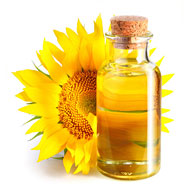
The sunflower, or Helianthus annuus, is a native of the Americas. The sunflower not only looks good, but is also the source of one of the healthiest cooking oils in the world, sunflower oil. Sunflower oil is obtained from the seeds of the sunflower. This amber colored oil has a pleasant mild taste and in addition to its culinary use, it is also widely used in cosmetic products.
Sunflower oil benefits. One of the biggest health benefits of sunflower oil is that it protects the cells in the body from cancer causing radicals. Sunflower oil is also rich in vitamin E which helps in preventing diseases such as asthma, rheumatoid arthritis and colon cancer. Sunflower oil being low in saturated fat and high in linoleic acid lowers the risk of heart diseases and also burns bad cholesterol. Another one of the health benefits of sunflower oil is that it helps to keep food healthy and fresh for a longer time. Even though sunflower oil has so many benefits it also certain side effects. Consumption of less than 2 tablespoons a day would do no harm but incase of higher consumption some of the potential sunflower oil side effects can be seen as under;
- Among all the vegetable oils, sunflower oil is the richest source of vitamin E, an essential antioxidant for the body. In fact, consuming sunflower oil can help you to meet the recommended daily allowance (RDA) for vitamin E.
- Sunflower oil is low in saturated fats and trans fats.
- The oil is rich in the essential fatty acids.
- Consuming sunflower oil on a regular basis can help to lower cholesterol levels. In fact, studies show that the consumption of sunflower oil can significantly lower the incidence of cardiovascular ailments.
- Sunflower oil is also a rich source of many vitamins, minerals, and antioxidants.
- Sunflower oil is more stable than other vegetable oils and suffers from a lesser degree of partial hydrogenation when kept in storage for long periods of time. This also translates into an excellent shelf life.
- Sunflower oil shows significant health benefits as compared to other vegetable oils such as olive oil, safflower oil, canola oil, cottonseed oil, and corn oil.
- In fact, the recently released Dietary Guidelines for Americans, which is published by the United States Department of Health and Human Services, specifically recommends sunflower oil as an important dietary supplement.
- It is rich in polyunsaturated fatty acids which can react with the body, oxidizing the blood and damaging the arteries thereby resulting in a stroke or heart disorder.
- Excess consumption of polyunsaturated fatty acids can also elevate blood pressure levels causing kidney failure and other serious complications.
- Obesity, joint pain and non-insulin dependant diabetes can also be caused by excess consumption of sunflower oil.
Sunflower oil nutrition. Let us take a look at the nutritional profile of sunflower oil. One ounce of sunflower oil typically offers 151 calories, however only 86 calories are obtained from fat. In fact the total fat content in this sample amounts to 10 gram, out of which only 0.6 gram is obtained from saturated fats. The rest is obtained from healthy, unsaturated fats.
Sunflower oil skin. Using sunflower oil for skin health has been a popular practice for many years mainly because sunflower oil is non-greasy oil which gets absorbed quickly in the skin and doesn’t make the skin feel oily. It is commonly used for body massages as it contains vital ingredients such as palmitic acid, stearic acid and linoleic acid which are all important for healthy skin. The natural linoleic acid in the skin reduces with progressing age and can even be lost with the use of strong cleansers and soaps. Regular massages with sunflower oil therefore help in restoring this lost linoleic acid and keep the skin looking younger. Since sunflower oil is easily absorbed by the skin and is rich in vitamins A, D and E and also essential fatty acids, it is also used in a number of soaps, lotions, creams and topical applications. The benefits of sunflower oil nutrition can even be used in cooking. Sunflower oil is rich in nutrients, light and odorless which makes it perfect for cooking healthy recipes. Since it is a low in saturated fats it can be used for frying and baking and can also be used as a healthy salad dressing along with other spices and herbs.
Also, studies conducted on premature babies have shown that applying sunflower oil on their skin on a daily basis can reduce their chances of developing skin infections by 41 per cent.
|