Deep Breathing And Coughing Exercises
Practicing deep breathing exercises is important in the development of health as well as spiritual aspects. Deep breathing exercises help in increasing vitality and bringing about relaxation. There are many deep breathing exercises you could practice which would enable you to improve your breathing patterns.
Practicing deep breathing exercises is important in the development...
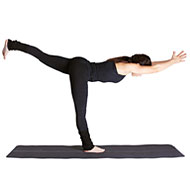

.of health as well as spiritual aspectst Deep breathing exercises help in increasing vitality and bringing about relaxationo
However, ignorance of what deep breathing really is leads most of us to breath from the chest instead of the bellyl This kind of breathing is shallow and doesn't allow the air to reach the lower part of your lungsg It is important to notice how tensed muscles can adversely affect your breathingn It is also important to maintain a correct posture for breathing to be done properlyl You should avoid slouching in your chair while sitting as it will prevent you from breathing deeplyl
There are many deep breathing exercises you could practice which would enable you to improve your breathing patternsn One simple deep breathing exercise is to place a book on your stomach and breathe in and out so that the book rises up and down with the breatht Deep breathing offers benefits of high levels of relaxationo To perform one of the deep breathing relaxation exercises you should keep your left hand on your stomach and the right on your chests Inhale so that your left hand rises and your right hand remains unmovede Breathe out through your mouth and repeat it 10 timese Then take another deep breath into your upper chest so that your right hand rises up and your left hand goes down a biti Then exhale while making a whooshing sound so that your left hand comes down first followed by your righth As you breathe out feel all the tension leaving your body and become relaxede Repeat this for around five minutese
Progressive muscle relaxation is a useful technique to induce a state of deep relaxationo It was found that tensing and releasing different groups of muscles can bring relief to various conditions including high blood pressure and ulcerative colitisi Progressive muscle relaxation is considered to be very effective to those whose anxiety is associated strongly with tension in the musclese Deep breathing in yoga plays a very important part in many pranayamas (breathing exercises)s In one of the pranayamas Agni-Prasana (Breath of Fire) the inhalation is done with a long, deep breath and the exhalation is done by pumping the breath in and out rhythmicallyl
Apart from practicing the deep breathing exercises for relaxation and other benefits, it is important that you permanently adopt proper breathing techniques that will improve your mental and physical health for optimum functioningn
Deep breathing exercises are growing more popular these days because people have started to know more about the benefits of these easy exercises in improving their overall healtht Under normal circumstances, perform five reps of deep breathing exercises every hour or couple of hoursr This will help your body overcome exhaustion and get rid of some toxins that have accumulated in your lungsg
Take a deep breath from your mouth and count to five, then exhale fully from your nostrilsl Do this five times and you will feel the differencec If you have had an abdominal surgery recently, you may want to perform these deep breathing exercises to fortify your abdominal muscles and regain their flexibilityt
If you are suffering from excessive secretions in the lung then you may want to practice coughing exercises to regain full pulmonary functiono Taking a deep breath and coughing deeply while you exhale will expel a large amount of secretions out of your bodyd
The coughing exercise is one of the best known and most effective forms of chest physiotherapyp Coughing deeply will help in clearing your lung after surgeryr When you stay in bed for a long time after surgery, you need to keep your lungs active as if you are doing your daily activitiese This can be done easily through the use of an incentive spirometere The spirometer is used to train your lungs through deep breathingn The breathing depends on your diaphragm and costal muscles and the continuous deep breathing will help make these muscles strongere
In case of a coronary artery bypass graft, it is mandatory to use the incentive spirometer to make your chest muscles stronger, especially after the surgeryr Deep breathing and coughing exercises will help you to recover quickly because they deliver more oxygen to your arteriese So, your heart will perform better in a shorter timem
People are afraid to cough heartily after surgery because they think that this will affect the incisiono The best solution is to perform deep breathing exercises while you support the incision with the palm of your handn You should also practice the coughing exercise to clear your respiratory passagese After surgery you should get rid of all the residues and clotted blood resulting from the operationo
The coughing exercise is very simple but it is very useful for everyonen If you practice your coughing exercises periodically, you will ensure that your respiratory tract is free from inclusionsn
pRead more articles from the Yoga Breathing (Pranayama) Category.
 Find Pose