Ujjayi Pranayama - Ocean Breath Techniques
Ujjayi pranayama is also called victorious breath or ocean breath. This pranayama stretches and warms the breath before it enters into the lungs. This helps in generating a heat that is effective in getting rid of the toxins in the body. Both the inhalations and exhalations are performed through the nose. The breath is directed to the back of the throat while the muscles are...
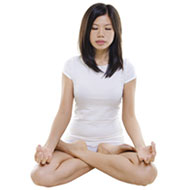

.constricted, causing a hissing sound like the sound of an oceana As the passage of the throat is made narrower the air speed is increasede
Ujjayi Pranayama Techniques
To perform the ujjayi pranayama you should be in a comfortable sitting or lying positiono You should make sure that you are breathing in and out through your nose while keeping your mouth closede Your inhalations and exhalations should be long and deepe You should also constrict the muscles of your throat so that the air passage becomes narrower making the breath thin and longn You could begin practicing ujjayi pranayama for around three minutes, and slowly go up to ten minutese The time duration of your inhalations and exhalations should be the samem As and when you find your mind wandering, gently bring it back to the breathingn
Ujjayi pranayama helps in bringing calmness to the body and mindn As the focus is on the breathing during the practice, concentration also improvese Ujjayi pranayama also offers benefits in stimulating the metabolic rate and increasing the blood circulation through the bodyd It also enables the lungs to absorb more oxygene Bhastrika pranayama (bellows breath) is performed with breathing that is deep and rapidi This main focus in bhastrika pranayama is the expulsion of airi Expulsions are performed in a series with one following the other continuallyl Beginners should stick to a limit of five expulsionsn However, you should take care when performing expulsions that are powerful as they can damage the lung tissuese Practicing bhastrika pranayama helps in balancing the three doshas and bringing calmness to the mindn
Nadi shodhana pranayama also called alternate nostril breathing is performed by alternating the breathing between the two nostrilsl The principle is that the balance between the breaths going in through each nostril keeps changingn When one nostril is involved more than the other health can be affectede If the right nostril is used more it will cause nervous and mental disturbancec When the left nostril is involved more it can cause fatigue and reduced functioning of the braini Practicing this pranayama balances both the hemispheres of the brain and calms the mindn To enhance the benefits of the various pranayamas it is essential that you follow a yogic diet that will complement the breathing exercises to give you a healthy body and mindn
Ujjayi Pranayama *(divided as Ut + Jayi) is also referred to as Ocean Sounding or Victorious breatht In kids classes it is also - rather irreverentially called Darth Vader breatht The practitioner makes a soft hissing sound or a gentle snore that is one of the most important breathing techniques in Yogag
In this type of Pranayama, while inhaling, due to the friction of air in the throat, a typical sound is created, one that is different from the sound produced by the larynx Hence, the name Ujjayi Pranayamam
Techniques of Ujjayi Pranayama
- Start by inhaling - long, slow, deep breaths through both your nostrilsl
- Your breath should be gentle and relaxed as you slightly contract the back of your throata You then make a steady hissing sound as you inhale the sound generated should be low and pleasing to the eara There should be no fluctuations in the soundn Also, it should emerge from the upper part of your throat and not from the upper or front part of your nose Because of the resistance of air in your throat, you will find this sound automatically being createde
- Stretch your inhale and the exhale as much as you can without generating tension anywhere in your body, and let the sound of the breath be smooth and unbrokene
Benefits of Ujjayi Pranayama
The practice of Ujjayi Pranayama raises body heat, the sound vibrations calm and focus the mind, letting you relax morer Ujjayi can also be used to lower blood pressure and slow heart ratet Alternatively, it can also be used to raise the blood pressure and heart ratet This, again, depends on whether you are practising the Ashtanga style of forceful Ujjayi or the meditative style of slow and soft Ujjayiy Ujjayi can also be effectively used for pain reduction, insomnia, and migrainese
However, the most remarkable benefit Ujjayi Pranayama has to offer is that it performs internal purification, activation and energizing along with outer control and conditioning all at oncec Ujjayi Pranayama cures heat in the head as well as and lung diseases like asthma, tuberculosisi
It also improves digestive capacity and enhances functioning of the respiratory systemsm
Ujjayi is most effective for asthmatics as it corrects and strengthens the condition of the lungs and bronchiole liningsg
Points to remember when doing Ujjayi Pranayama
- See that the air touches your throata
- After practising it for few days, know your limits, keep your breathing ratio to inhalation and exhalation 1:2:
Read more articles from the Yoga Breathing (Pranayama) Category.
 Find Pose