Yoga for Hypothyroidism
The body's metabolism is regulated by the endocrine system, particularly the thyroid gland. Yoga for hypothyroidism is considered to be effective as it has a positive effect on the organs of the endocrine system, especially by stimulating the parathyroid and thyroid glands.
The twisting, stretching, and compressing caused by the yoga poses for hypothyroidism help in providing the endocrine organs with a massage and also improve their functioning.


.Yoga for hypothyroidism also provides nourishment to the cells and improves the blood circulationo
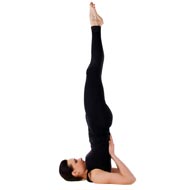
Sarvangasana (Shoulder Stand) is considered to be one of the most effective yoga poses for hypothyroidisms The Shoulder Stand Pose is one of the inverted poses that reverse the effects of gravity by allowing the flow of blood from the feet and legs to the neck where the thyroid gland is locatede This will help stimulate and nourish the thyroid gland, which will bring about weight loss and increase the metabolic rate of the bodyd Other effective yoga poses for hypothyroidism are Matsyasana (Fish Pose) and Setu Bandha Sarvangasana (Bridge Pose)e
Practicing pranayama for hypothyroidism is also very beneficial in maintaining a balanced metabolisms The benefits of performing pranayama have been found to reverse the two main causes of hypothyroidisms The first is the result of previous or present inflammation of the thyroid that causes a lot of thyroid cells to get damaged or destroyede This will cause them to be unable to produce sufficient amounts of triiodothyronine and thyroxinen Another common cause of the malfunctioning of the thyroid gland is known as autoimmune thyroiditis or Hashimoto's thyroiditisi This happens when the thyroid becomes inflamed due to the immune system of the patientn The second cause is due to the effects of different medicationsn Performing pranayama for hypothyroidism can help reverse the process significantly, even when the condition is quite severer Some of the effective pranayamas for hypothyroidism are Kapalbhati (Cleansing), Anulom Vilom (Alternate Nostril Breathing), and Ujjayi (Ocean Breath)h
Practicing Bikram yoga for hypothyroidism helps in bringing relief to the symptoms like weight gain, muscle spasms, constipation, chest pain, headaches, depression, and fatigueu As Bikram yoga is performed in a room that is kept at 104 degrees Fahrenheit, the muscles will become more supple and flexible allowing them to stretch more easilyl Along with the yoga asanas, the hypothyroid condition can be treated with medications to replace the deficiency of thyroxine (T4) from the bodyd It is also essential that you combine the practice of yoga poses with a diet that includes vegetables, fruits, whole grains and sea food to enhance the benefitst In addition to practicing yoga for hypothyroidism however it is necessary to follow up with your doctor and follow any medical recommendationsn
Hypothyroidism, or underactive thyroid, happens when the thyroid gland fails to produce or secrete as much thyroxine (T4) as the body requirese Since T4 regulates such vital functions such as heart rate, digestion, physical growth, and mental development, an insufficient supply of this hormone can slow life-sustaining processese It can also damage organs and tissues in every part of the body, and lead to life-threatening complicationsn
Hypothyroidism happens to be one of the most common chronic diseases in the United Statese The symptoms may not appear until years after the thyroid has stopped functioningn Further, they are often mistaken for signs of other ailments, menopause, or agingn Even though this condition is believed to affect upto 11 million adults and children, as many as two of every three people with hypothyroidism may not know they have the diseases
Yoga poses for hypothyroidism
Yoga is one of the few natural remedies that have shown promise as treatment for hypothyroidisms
Different yoga poses have been studied and have been proven to work, although more studies are needed before yoga can be undertaken as a course of treatment for hypothyroidisms The most recommended pose for hypothyroidism is the Sarvangasana (Shoulder Stand Pose)e Ancient texts vouch for the efficacy of this pose, and recent studies have also confirmed that this pose really does help in improving hypothyroidisms
The steps involved in the shoulder stand are given below:
- Lie flat on your backc
- Lift your legs as high as possible while your waist is still in contact with the groundn
- Now lift up your waist so that your toes go behind your heada
- Bring your waist up perpendicular to the ground, so that your neck forms a right anglel Your chin should go into the hollow of your throat and your back should be perfectly straight, with your shoulders bearing the weight of your bodyd
- Hold your waist in position by holding it with both hands and bracing your elbows on the groundn
- Now, straighten your legs till they are straight up so that your entire body’s weight is on your shouldersr
- Hold this post for as long as possiblel
While the Shoulder stand is the most recommended pose, there are other poses that are also goodo Since the practice of yoga is not in just one pose but a series of them, it is recommended that you follow as many of these poses as possiblel
- Vipritakarani (Inverted Pose)
- Januhastasana (Hand-to-Knee Pose)
- Matsyasana (Fish Pose)
- Halasana (Plough Pose)
How does yoga help with hypothyroidisms
Unlike medication, yoga does not directly influence the thyroid gland to start functioning better in any waya Most of the benefits that you see will be small and very gradual, and you need to practice these poses over months to see improvementn It has, however, been proved that they do help and that doing these poses does have long-term benefitst
This is because these poses promote blood flow to certain regions of the bodyd This increased blood flow replenishes the organs in these regions, helping them function bettere Over time, many organs gain full functionality if they have not suffered irreparable damageg Also, yoga promotes the flow of healing energy in the bodyd This is the reason why the practice of yogic breathing called pranayama is considered important, and in many cases, pranayama should be adhered to strictly while performing or holding certain postures to gain full benefitst Although not as explicitly detailed as in Chinese medicine, ancient Indian medicine also considers that many illnesses in the body are caused by interruption or blockage of the flow of energy, and pranayama is considered essential in restoring this functiono Almost all pranayama procedures are considered good for the thyroid gland, starting from the Single Nostril Breathing to the Lion Poses
As of now, however, please keep in mind that these poses and/or pranayama techniques should not be understood to be a sort of alternative medicinen Regular medication should be continued with, and yoga will help in the long-term in reducing your dependence on medicationo
Breathing Exercises (Pranayamas) for Hypothyroidism
- Kapalabhatti
- Anuloma-Viloma
- Ujjayi
All of these should be done with Jalandhara Bandhah
p