
- Pilates
- Cardio Pilates
- Pilates Abs
- Pilates Ball Exercises
- Pilates Equipment
- Pilates Exercises
- Pilates Focus on Inner Strength
- Yoga and Pilates for Weight Loss
- Yoga and Pilates Mats
- Pilates Diet
- Pilates Method
- Pilates Mat Exercises
- Yoga For Men
- Yoga Pilates
- Pilates Exercise Equipment
- Yogalates | A cross between yoga and Pilates
- Yoga Pilates for Men
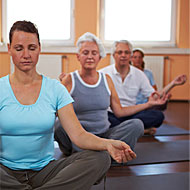
Yoga and Pilates
What is yoga?
Yoga is the finest and most time-honored path to physical and mental well-being ever known to man.
While some folks are of the opinion that Yoga is simply a physical exercise, in fact it is a complete system for overall health and happiness. It encompasses everything from physical postures, personal hygiene, and a healthy (Sattvic) diet to breathing, meditation, and relaxation techniques.
Related Articles
Related Blogs
Yoga Questions
Continued...
Why practice yoga?
Like many forms of physical fitness, Yoga asanas effectively stretch and strengthen your body. However, the greatest benefits of Yoga asanas, are derived from their great effects on the internal systems of the body. By bending, stretching, twisting, and flexing in the various postures, you rinse your internal organs with oxygenated blood and Prana, (this is also known as vital force or life energy. The practise of Yoga soothes and tones your nerves and regulates your endocrine system. This, by the way, is responsible for production of hormones - the key to physical and mental health. Yoga also improves digestion and elimination, strengthens your respiratory system, and tones up your reproductive organs. Even though Yoga techniques such as asanas, breathing exercises, and relaxation are very effective in relieving stress, ultimately it is Yoga meditation that relieves deep-rooted stress and anxiety, thus enabling you to experience Yoga's greatest gifts. These are spiritual happiness and inner peace.
What is Pilates?
The Pilates exercise system was formulated by Joseph Pilates over 80 years ago for more specific and limited purposes. It was derived from ancient yoga asanas. Even though it is not a complete balanced or holistic exercise and health system, Pilates is fairly beneficial. Pilates mostly concentrates on cultivating core body strength and lengthening the spine. Pilates has been practiced for decades by dancers and has become popular in recent years largely for its aesthetic sculpting effect on the body.
Pilates are a valuable tool for enhancing one’s strength, muscle definition, and good posture.
Guidelines for Yoga and Pilates practice:
- Yoga asanas, particularly inversions and those that constrict the abdomen, shouldn’t be done on a full stomach. Always pay attention to your body - if you practice too soon after eating or drinking, some poses may feel uncomfortable.
- It is best to practice barefoot, on a Yoga mat or non-slip surface for standing postures. A mat, rug, or folded Yoga blanket provides you the necessary firm padding for other postures.
- Always wear only comfortable clothing, which lets you move freely.
- The room should be well ventilated with sufficient space to stretch your arms and legs in every direction without colliding into anything.
- While practicing, focus on the feeling which the asana produces in you.
- If you feel tired or unstable in an asana, retreat from it. Slowly as you build up strength you will automatically be able to hold it longer.
- Don't exceed your personal limitations; stretch your boundaries gently. Performing asanas properly entails doing them to the best of your capability without effort.
- Throughout your workout, concentrate on your breathing; it should only be through your nostrils. Breathing with awareness not only makes you feel good, it also balances and regulates the of flow energy within your body, strengthening the internal organs and boosting resistance to disease.
What diet should I have while doing Pilates?
There are many ways by which Pilates can help you to lose weight. The use of pilates to lose weight involves certain exercises that work on burning excess calories and it will also help to you to build lean muscle. Most doctors and yoga instructors recommend Pilates for weight watchers as it promotes efficient and deep respiration that helps in weight loss. This is essential if you wish to burn calories. Keep in mind that there is no special diet or Pilates foods for people who are doing Pilates exercises. However, a healthy diet when combined with Pilates can lead to weight loss. Ensure you eat plenty of fresh fruits and vegetables, whole grains and that you drink a great deal of water as well.
How are Pilates useful for heart?
There are several cardio Pilates moves that one can choose from. Do ensure however, that you check with your doctor before practicing any of these moves. The different types of cardio Pilates moves depend on the goal of the cardio Pilate workout and the type of equipment used. A regular Pilates routine conditions and strengthens the body. A cardio and Pilates routine includes more emphasis on the legs and lower body which will help to increase your heart rate. Such cardio based Pilates workouts are usually offered either privately or in group sessions. A cardio Pilates reformer is used during these workouts.
How to do Pilates ball exercises?
Pilates mini ball exercises are exercises that use a 9 inch stability ball. This ball is also known as a Bender ball. These Pilates mini ball exercises are recommended for persons who are starting off with Pilates for the first time. This is because these mini balls are easier to use than the larger exercise balls in a Pilates routine. Pilates ball ab exercises include the following. Stand up or sit in a firm chair. Hold the ball in front of your lower stomach and then squeeze the ball for about 5-10 seconds. Tighten your buttocks when you are squeezing the ball. Repeat and do this about 10 times. Pilates ball back exercises are advised for relief from lower back pain.
Which yoga poses are most suitable for men?
Keep these points in mind before attending yoga for beginners class. Most importantly, do not feel overwhelmed by the number of poses. Start off with the simple poses and then slowly progress to the more important ones. Hatha yoga for beginners is recommended as it teaches the most basic poses. Yoga is useful for both men and women. The health benefits of yoga for women are countless. Yoga can help women to deal with stress, help them during pregnancy and labor, and also help them deal with any menstrual problems. Yoga for athletes is also advised as it helps athletes build flexibility and strength.
 Find Pose
Yoga and Pilates