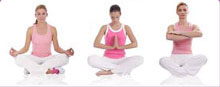
- Basic Yoga Positions
- Basic Yoga Mat
- Basic Yoga Exercise
- Power Yoga Basic Exercises
- Basic History Of Yoga
- Five Tenets of Yoga
- Basic Yoga Session
- How To Relax
- Advanced Session
- Yoga Props
- Getting Started Practicing Yoga
- The System of Yoga
- Yoga According To Your Lifestyle
- Beginner's Session
- Yoga Plan
- Yoga Myths
- Overdoing Yoga Routine
- Yoga Teacher Training
Practicing Yoga at Home
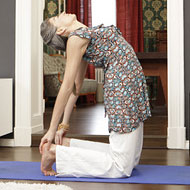
Yoga may seem complicated but there are a number of poses in yoga that you could practice at home. Simple yoga practice at home should not be very difficult if you are aware of at least some of your basic poses.
Yoga consists of a series of poses. These poses are to be done in a certain order and in a certain way.
Related Articles
Related Blogs
Related Topics
Yoga Questions
Continued...
How To Practice Yoga At Home
There are many resources that tell you how to practice yoga at home. What is primary is a deep commitment to do the poses regularly and without any short cuts. You can begin with basic routines and slowly move on to the more complicated ones as days go by and your body becomes more flexible.
Yoga at home should include some basic stretches. This forms part of the basic warm-ups that need to be done. Once the body is ready you could choose the poses you want to perform and begin with them slowly one at a time. Sun salutations are a common pick because these poses generally are good for the entire body. After sun salutations, you can do standing yoga poses, pelvic tilts, different stretches and finally ending with Corpse Pose (shavasana). You can also do different forms of breathing exercise (pranayama) as the entire yoga workout, alternating them with the poses.
It is important to learn these poses correctly. Yoga can completely reverse the benefit if you do the pose wrong. Not only that, it can also cause a lot of physical damage to bones and joints if asanas or poses are not done properly.
As a precautionary measure you could join a yoga class for sometime before you actually begin practicing at home. Alternatively, you can also learn poses from tutorials available on the internet or through DVD’s. There are special sequences for different physical ailments like back pain or diabetes. There are even sequences for pregnant women in particular.
Yoga Props For Support
If you are going to do yoga at home, you might also need some props like support and mats. A yoga mat is something you will need to cover the floor with when you do your poses. A yoga blanket makes a good prop when you need to support you spine or back while sitting on them in complicated poses. Then there is the strap or the belt which can help when you are not able to reach a certain position. A yoga brick also plays a similar role.
It is always a good idea to do yoga with a partner, at home or in a small group for four or five people. Not only is the motivation high, but also each person acts as a teacher and can monitor everyone else to make sure that the poses are done correctly.
Yoga Practice At Home