Windmill Pose
Windmill pose is very good for digestion and excretion. It stretches the lower back and strengthens the abdominals. It is very good for releasing gas and massaging kidneys. Your hips should be placed on the ground throughout the exercise.
To intensify the stretch, hold each knee for 5 to 10 seconds. Exhale when you bring the knee in and inhale when your leg extends out. If your lower back is strained, keep your knees bent with soles on the floor.
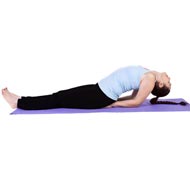

When you bring in one foot to the chest, the other should rest on the floor. To stretch the neck and shoulder, bring the knee to the chest and the forehead should move towards the knee. But do not strain the neck and shoulders in the process.
How it is to be done - lying on the floor.
Suitable for - Everybody.
Steps - actual procedure for that asana.
- Start with little boat pose
- Inhale and raise your right arm over your head and at the same time, extend your right leg downwards. The back of the right hand and the thigh of the right leg should touch the floor
- As you exhale, move your right knee towards the chest and the right hand to the right knee.
Hold the right knee with the right hand. Your elbow should be close to the body - Now raise your left arm overhead while inhaling and extending the left leg along the floor. The back of the left hand and the heel of the left foot should touch the floor
- Exhale and move the left knee towards your chest and the left hand should move to the left knee. Hold your left knee with your left hand
- Repeat steps 2 to 7 for six to eight times
- Release the pose by placing the soles of the feet on the floor and bringing the arms to lie next to the body
Benefits to body parts - Helps digestion and excretion. Gives a stretch to the lower back and makes the abdomen stronger. Eases bloating and cramps by releasing intestinal gas. Makes the hips flexible and massages the posterior of the body and kidneys.
Precautions - Avoid this exercise if you have hernia.
 Find Pose