Yoga Diet and Cleansing
There are many approaches to eating. But, without doubt, the right food, taken in the right amount, in the right combination, at the right time, is most important. It is just as difficult an art - one that can only be mastered by trial and error - to find out what works best.
This article will focus on one of the many Yogic cleansing techniques - the cleansing diet.
There is a primeval belief that you must exhale before inhaling.
p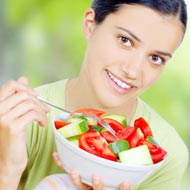

.Differently put, you must empty before fillingn Likewise, with regard to nutrition, you should cleanse before you nourishs The first step here is to eliminate all junk foods from our diet, food additives, snacks, desserts, leftovers, canned & processed foods and salty stufff The point is to eat fresh foods freshly prepared and keep our meals as simple as possiblel Reduce the size and frequency of meals, and make sure to chew your food carefullyl
The second step is to learn to differentiate between the heavy and light food groupsp Carbohydrates, proteins and fats fall into the category of heavy, or nourishingn Fruits, vegetables and herbs are called light, or cleansing foodsd In a balanced diet, servings of heavy foods are matched almost evenly with portions of light foodsd In a cleansing diet, you decrease heavy foods and increase the quantity of light foodsd
Next you learn to do away with animal-based proteins – these include pork, red meat, poultry, fish, eggs and dairyr They are thick and very nourishing foods and, hence, are considered inappropriate for cleansingn Besides, being high on the food chain, they are likely to carry environmental toxinsn
For energy, you should continue to eat plant-sourced protein in small quantities during your cleansingn For this, the best choice is a blend of simple well-cooked whole grain and beansn The smaller the beans, the easier they are to digests
You can use the cleansing diet any time you feel your digestion is sluggish, if you feel heavy, congested or lethargic or when you are feel yourself coming down with a cold or fevere Other symptoms for which the cleansing diet is suitable include headaches, a thickly coated tongue, bad breath and digestive indispositions such as flatulence, bloating and constipationo There may be some side-effects to the cleansing diet as welll Some of these include weakness, insomnia, palpitation, fainting spells, absence of menstruation and certain specific illnessese For this reason, it is advisable check with your doctor or physician before embarking on Yoga cleansem
Ideally, the yoga cleansing diet should be supported by gentle stretching and other asanas, deep breathing, sweating and massageg Bear in mind, you should leave plenty of time between meals and have no meals between 7 p m. and 9 a m. A short cleanse can be done within 3 daysy Some folks may have to remain on a cleansing diet for anywhere between 1 to 3 weeks, depending upon their constitution and conditiono
p