Yoga >>  Articles >>  Yoga Asana Benefits

Bridge Pose


Submitted by Kevin Pederson on May 31, 2011

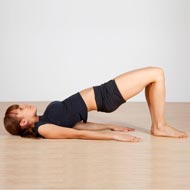
The Bridge Pose or the Setu Bandhasana, means building a bridge. “Setu” means “bridge” and “Bandha” means “lock.” The Bridge Pose is an effective yoga posture to reduce stress and bring about relaxation to the mind and body. In the performance of the Bridge Pose, the hips and legs are worked the most, which help relieve tired feet. To perform the Bridge Pose you should be in the lying position, while bending your knees. Your feet should be kept together, arms at your side, and the palms facing the floor. You should then bring your hips upwards while keeping your palms and feet lying flat on the ground. From this position, you should bring your arms to come over your head. This will complete a full bridge pose exercise and you could remain in this position for as long as you feel comfortable. Practicing the Bridge Pose helps in toning the body as a result of the positive effects that the pose has on the spine. You could also make use of props like a pillow or a chair to provide support to your legs or back when you stretch.

Salabhasana (Locust Pose) is an effective posture for the legs, arms, and abdominal muscles. It also helps in improving the posture and relieving stress. If you suffer from any back problems you should avoid performing this posture. To do this posture, you should lie down with your stomach on the floor and your arms at the sides of your body with your palms facing upwards. You should keep your forehead resting on the ground. Then slowly first lift your head followed by the arms and upper torso. Once you come to this position let your legs lift up, while making your arms to come parallel to the ground. In this position, you will be resting on your lower ribs and abdomen. You should remain in this position for about a minute. 

Performing Urdhva Dhanurasana (Wheel Pose) helps strengthen your wrists, arms and legs. It also helps in increasing the flexibility of your spinal column and back. In performing this pose the front of the body gets stretched and the back part of the body bends. To perform this posture you should be in the lying position with your back to the ground.  While you breathe out let your knees bend and your feet come close to the buttocks with the soles of your feet lying flat on the ground. Then bring your arms backwards such that your palms are flat on the ground under your shoulders and your elbows are bent. Then, take a breath slowly and raise your buttocks, back and head off the ground and arch your spine. Let your stomach and hips come up as high as possible. Remain in this position with the inhaled breath and gently exhale and come back to the starting position.

You could also practice Halasana (Plow Pose) for stiffness in the back and neck. In performing the Plow Pose, the ligaments of the calves and thighs get relaxed and stretched, which improves flexibility. It is also effective for constipation and gastric problems. However, for the yoga postures to be effective, you must make sure to practice them regularly, complementing them with a well-balanced diet.

The bridge pose takes the challenges presented by the pelvic tilt and puts them into perspective. By raising your pelvis you start to get rid of the customary support coming from the floor. Instead you bring in variables for your abs and back muscles in a bid to settle things through strength and stretch work. As a result you develop stronger, smarter core muscles that help you develop a centered, easy alignment and good posture. Most importantly, here you will get precautions to avoid re-injuries and worsening of pain.


Benefits of Bridge pose

For people suffering from back pain, the bridge pose provides a set of challenges to the body and mind. Together they provide a front entrance to the benefits of Yoga practice. Like most yogasanas, the bridge pose engages the whole body.

  • Starts to change the balance between strength and flexibility of the musculature of your physique.
  • Props up postural positions
  • Promotes a balanced position of your pelvis that prepares your postural muscles for productive curative work.
  • Stirs up and make the core abdominals stronger for controlling your pelvic tilt. Make the low back muscles stronger.
  • Helps you get rid of unwanted muscle tension, for instance, in certain muscles of your shoulders and in the front of your body.
  • Utilizes both front and rear muscles of the body to even out your trunk.
  • Cultivates in the practitioner an awareness of his / her body in space.


Bridge Pose for back pain

While rehabilitating an injury with exercise, you had best work in a position that gives you optimum relief from symptoms. Having established yourself in the bridge pose, take a moment to observe your symptoms. If they are present, you ought to stop the Yoga session and ask your medical practitioner if the asana is suitable for your particular situation. After getting an okay, you may return to Yoga class.

Is Your Back Pain Acute or Chronic? Bridge Pose Makes a Difference.

To avoid re-injuries, folks suffering from acute back pain or a relapse might just be better off waiting until the thing subsides, before going in for the bridge pose. Consult your doctor or medical practitioner to make sure and remain safe and to avoid any re-injuries.

Read more articles from the Yoga Asana Benefits Category.
Related Topics
 
Related Questions
 
Newsletter Sign-up
 
Subscribe eBooks
 
Related Yoga Information
yoga and healing center
yoga and trauma
yoga and stress relief
strap yoga
yoga gita
 
Get Current News
 
Yoga Asana Benefits